For Historical Fiction WritersThe past is not a backdrop.
The past is not a backdrop.
It is the story.
Period customs, real events, social hierarchies, and the line between fact and fiction. OpenAtelier holds your research and your invention side by side so the history feels lived in.
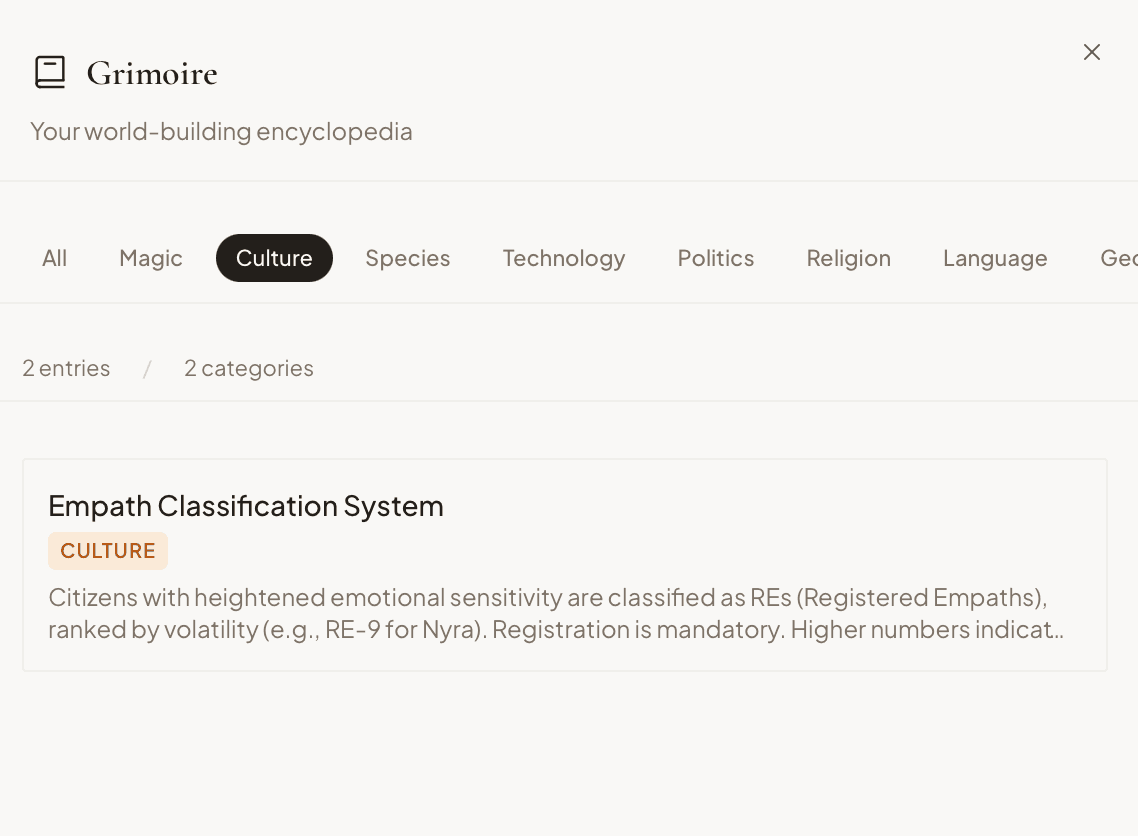
GRIMOIRE
The period as a verified reference table.
Keep dates, garments, household objects, titles, and political bodies in one bound book. The research you have done, organized for the next time the chapter asks for it.
- Categories you can rename to your century
- Cross-references between sources, places, and people
- A reference that grows alongside the manuscript
Grimoire
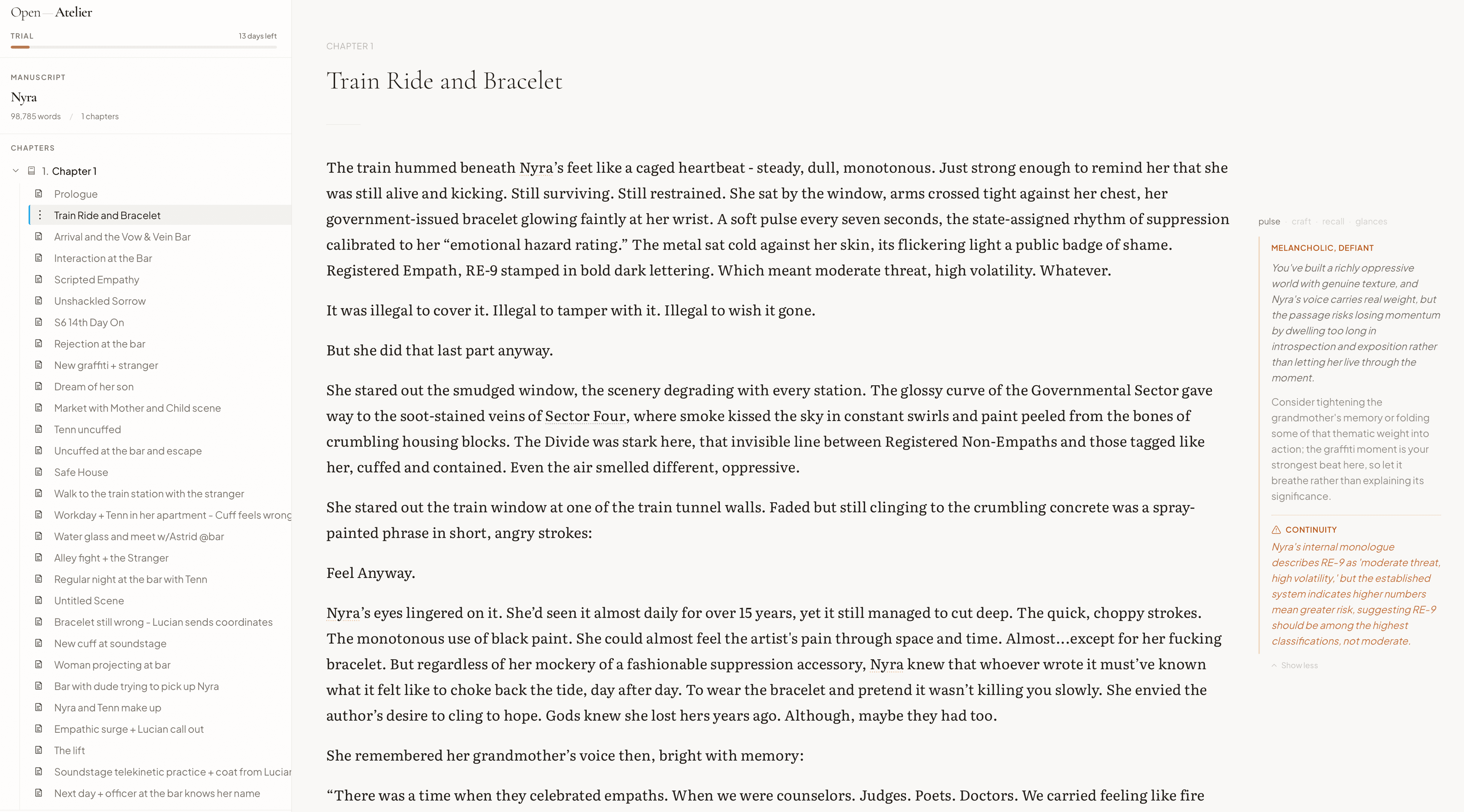
THE EDITOR
Footnote-quiet margins for a careful prose.
Notes sit beside the line they concern. Source, doubt, and cross-reference, kept where the writer can see them without breaking the sentence.
- A three-pane layout that keeps research at hand
- Margin notes pinned to the line they belong to
- A serif page that reads like a printed proof
Nyra: Train Ride and Bracelet
LA PLUME
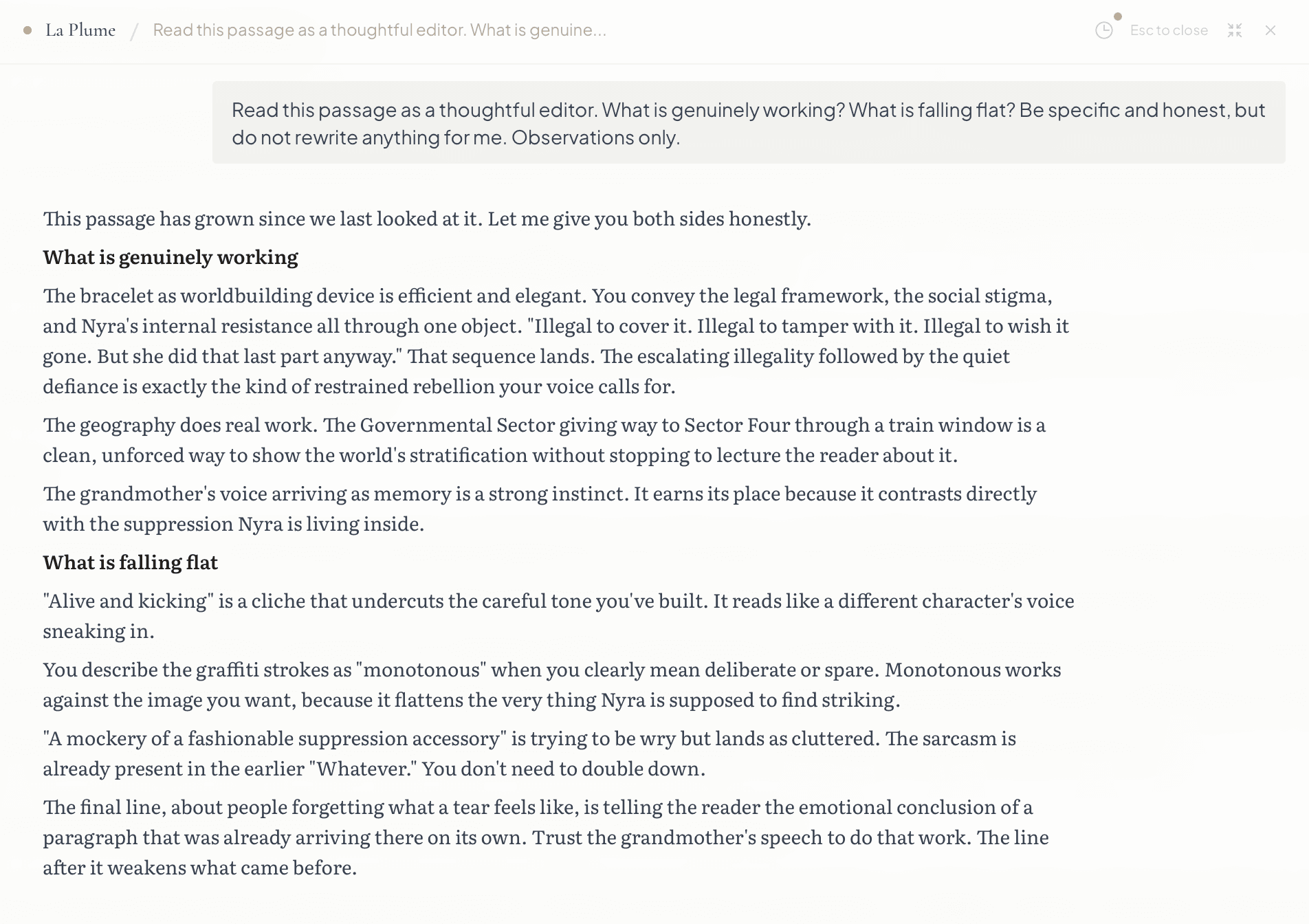
A reader for voice and period register.
Ask whether a passage holds its tone and lands its period. A second reading focused on craft, not on dressing the page in modern clothes.
- A close reader for voice, register, and rhythm
- Pen marks set where a sharp editor would set them
- A prompt written for craft, not output
La Plume
The past is a foreign country; they do things differently there.L.P. Hartley
62World-building prompts in the free checklist
0Limits on characters, events, or research entries
14Days to try everything, free
Bring the past to life.
14 days free. Every feature. Your story, your terms.